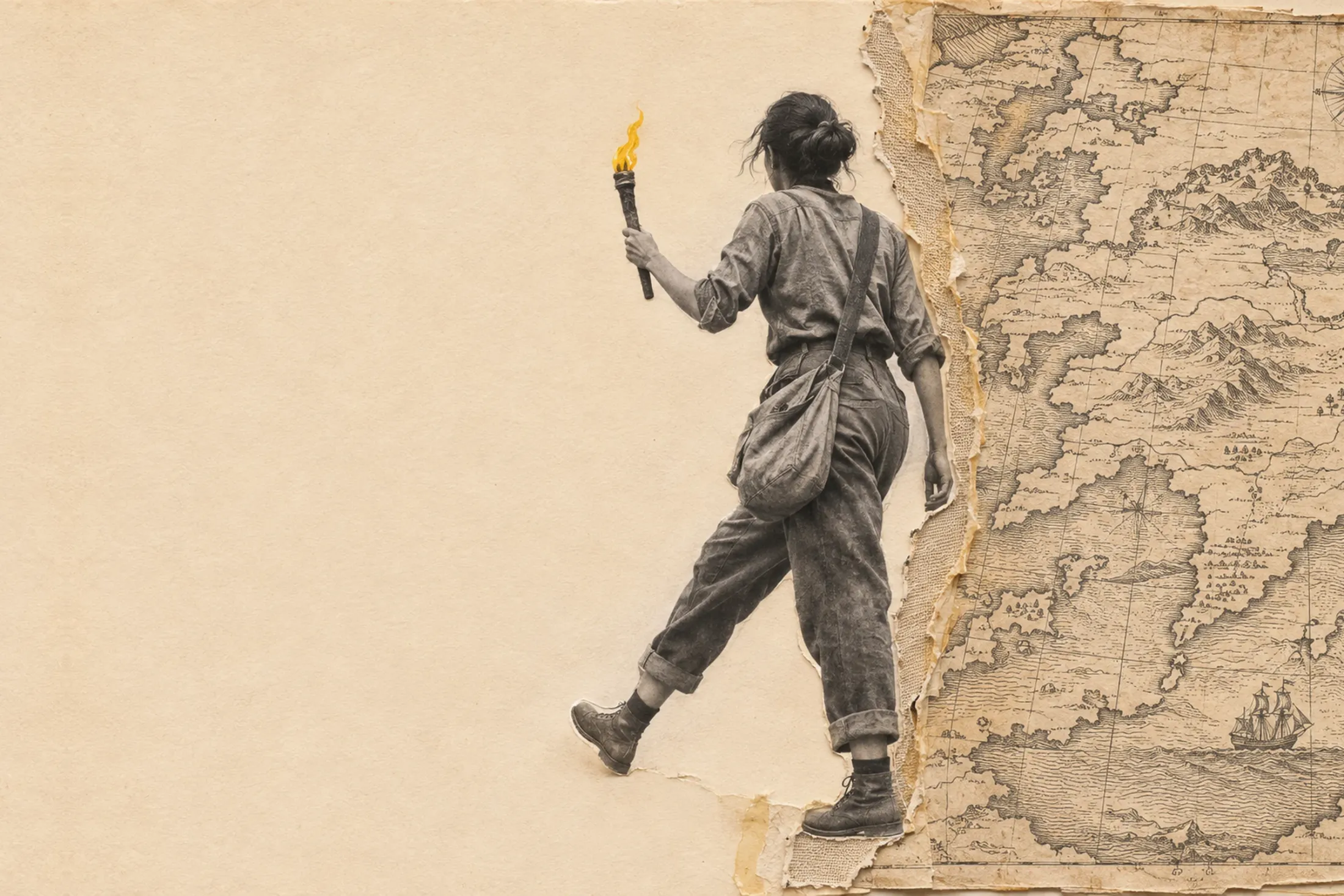
Sagittarius — The Torchbreaker of the Old World
An astrological and feminist deep dive into Sagittarius, Jupiter, freedom, meaning, truth and their shadows.
Contents
Wake up, darling. You have arrived in a world that was already fully interpreted.
You were assigned a seat at the table, told the story of your family and informed which wishes are sensible. With it came a map on which a few paths were marked with a promise and others with a warning, and the borders were simply already drawn in. Somewhere between the first “one doesn’t do that” and the first idea of what you were supposed to become, you may then have forgotten that this map was drawn by people.
Sagittarius looks at this map and asks a remarkably impolite question: who actually decided that the world ends at this edge?
Because Sagittarius is not the traveller of the zodiac for loving to book flights. It is the traveller because the limits of its experience so far are not automatically the limits of reality, and its real journey leads from an inherited idea about the world to the possibility of understanding the world differently.
So if we really want to grasp this archetype, we have to stop confusing freedom with movement. Then we talk about insight, hope, morality, attachment and the social conditions under which a different future is even allowed to be thought.
Welcome to Sagittarius season. The map is not the territory, and you are not obliged to spend your whole life inside its margins.
I The world is already interpreted
No human being starts life in a philosophical vacuum. Long before we can think about success, we see what others get recognition for, and long before we have an idea of love of our own, we experience relationships in which some behaviour is rewarded and other behaviour punished.
That is how experiences turn into expectations, expectations into rules, and rules sometimes into a worldview that at some point no longer stands out as a worldview, because it passes itself off as a description of how things supposedly just are.
It’s a bit like the smell of your own flat. Every visitor notices it immediately, only you don’t any more, because you have lived in it for so long.
This is where Sagittarius gets interesting. The archetype doesn’t only ask how to move more skilfully within an existing order. It asks on what basis that order came about and why its borders should actually be binding.
A tradition can give orientation, a faith can carry a community, and a rule can make possible a way of living together that would be harder without it. Sagittarius doesn’t have to break any of that. Its job is rather to make the familiar recognisable again as one possible interpretation, because we can only develop a different one once we tell reality apart from our reading of reality.
That doesn’t mean, by the way, that every view is equally true. It only means that no belief has a claim to truth merely because it is older than the people expected to submit to it.
That, I think, is where the philosophical side of Sagittarius begins: some of what was handed to you as a law of nature is a decision that was repeated for so long that nobody remembered it had once been a decision.
II Jupiter Hope, expansion and meaning
Jupiter likes to be described as the planet of luck, and honestly, luck is an astonishingly imprecise explanation for what this symbolism actually opens up.
I would rather tell it as three abilities that belong together. The first is hope, the ability to see a possibility for which there is no proof yet. That is no guarantee it will come true, it is only the idea that the present does not contain everything that could still come into being.
The second is expansion, and it makes the space of experience larger. Someone who has known only one form of relationship, work, faith or social order discovers that there are others, and the horizon shifts because new information arrives.
The third is meaning-making, and it doesn’t ask how many experiences we can collect. It asks what we understand from them, what connects them, which belief has to change and which one survives the test.
The three are not the same, and you can tell by what happens when one of them travels alone. Hope without contact with the present turns into consolation for later. Expansion without digestion yields a collection of experiences from which no consequence ever follows, and meaning-making without willingness to be corrected produces dogmas that have simply grown bigger.
So in this reading Jupiter does not automatically enlarge the good. A false belief can expand just as well, an unequal order can grow, and a person can widen their own possibilities while cutting back those of others.
Jupiter is a bit like a photocopier that blows everything up to poster size. It doesn’t ask whether the original was any good.
That is why the Sagittarius question is not only the one about the next horizon. It is the question of responsibility for the world that arises from our beliefs.

III The wound of autonomy
What happens to a person whose freedom is not simply limited, but whose belonging depends on handing over parts of their ability to decide?
Maybe a wish of their own is then treated like an attack on the family, or a boundary counts as lovelessness. Maybe someone receives support only on the condition that the person helping also gets a say afterwards in how this life is led.
In such circumstances freedom takes on a different meaning. It is no longer merely a possibility to develop, it becomes the precondition for experiencing yourself as a person of your own at all.
That explains an archetypal tension without pinning every person with Sagittarius placements to the same story. Where autonomy was threatened again and again, a readiness can develop to defend it very early, that is, as soon as a situation merely resembles earlier restrictions, and not only once someone has really crossed a line.
A request then sounds like a demand, and an agreement feels like the shell of a prison under construction. That there is an escape route becomes more important than the question of whether you need to get out of this particular situation at all.
It’s the person who checks where the emergency exit is in every restaurant and then wonders why they didn’t taste much of the meal.
But this is exactly where a distinction is needed that I don’t want to do without. Some fear of control is entirely justified, and not every commitment is control.
There are relationships whose conditions really have to change, and there are situations people really should leave. At the same time there are bonds in which reliability doesn’t destroy your freedom at all, but makes it larger.
Whoever treats all of that as the same loses the ability to choose between these possibilities, and the freedom Sagittarius is looking for lies precisely in that choice.
IV The wound of meaning
Some prisons have no locked doors at all. They consist of a life that looks perfectly fine from the outside.
The job is sensible, the relationship socially accepted, the appointments are organised, and the next few years can be predicted with some probability. And still the question surfaces at some point what all this order is actually for.
Meaning is not the same as permanent happiness. A meaningful life can be strenuous, full of repetition and fairly unexciting tasks, and a person can take on a commitment voluntarily because it belongs to a larger idea of how they want to live.
The wound arises where that connection gets lost or was never allowed to form. It happens when your own wishes are measured again and again only by whether they are practical, appropriate or useful to others, and when the meaning of a life has already been determined by somebody else.
In that position the next horizon becomes incredibly attractive. The new idea, the new job, the new city or the new relationship then promise more than a change, they promise that your life will mean something again.
Only, when meaning is always available just in the future, the present becomes a place you constantly want to leave.
The question then is not how to convince someone to be content with everything. The question is whether they can tell a way of life that truly no longer holds from the expectation that a different life must free them from every form of ordinariness.
A horizon doesn’t have to keep getting more spectacular in order to remain your own.
V The wound of truth
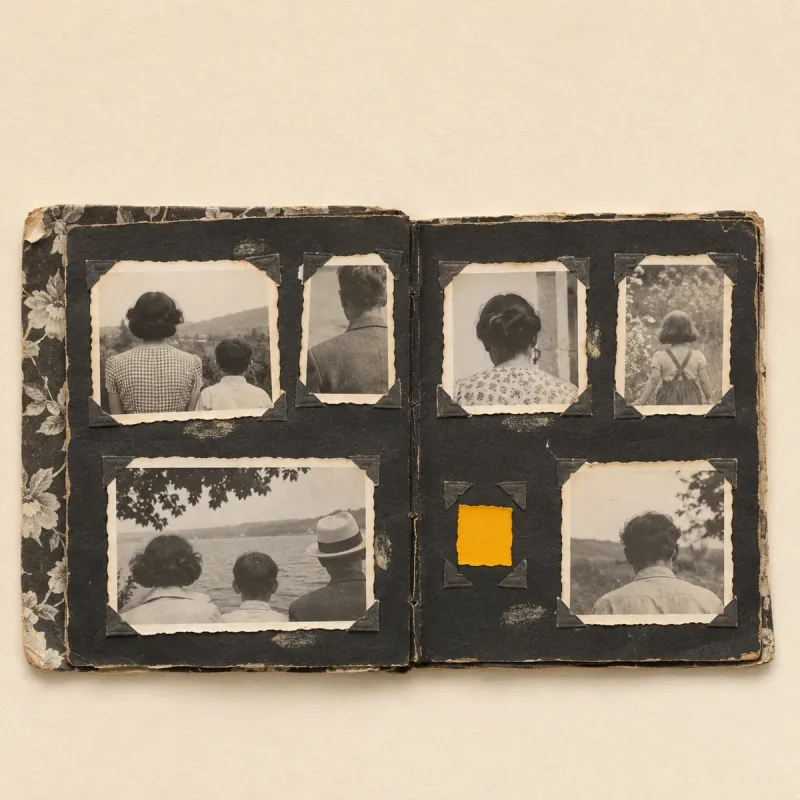
There is a difference between a belief you developed after careful examination and one you have to hold in order to be allowed to belong.
Sometimes a child is rewarded for the right answer although it hasn’t understood the question yet. Sometimes a person learns that naming a contradiction counts as betraying the group, and sometimes it is simply safer to repeat the official family story than to voice an observation for which that story has no room.
The Sagittarius wound can arise exactly where insight and belonging are played off against each other.
The search for truth then gets an additional job. It is no longer only meant to give orientation, it is meant to defend your own perception against other people’s definitions.
That can become an enormous strength. People who have learned to ask even against resistance make visible the contradictions a community has long ignored.
But the old conflict can also make contradiction itself feel threatening. Someone who has experienced again and again that their perception was devalued eventually reads every differing view as an attempt to deny them their judgement once more.
And so the very archetype that defends the right to ask questions develops difficulty with being asked questions itself.
I think this is the part that hurts, because both feel exactly the same from the inside. Whether someone is trying to take my perception away from me or simply disagrees with me, in the first moment I notice it by the same pull in my stomach.
The truth that once freed you from an old order must not become a new order in which nobody can disagree any more. Your right to a perception of your own does not require that every one of your conclusions becomes unchallengeable.
VI The shadow of expansion When movement prevents depth
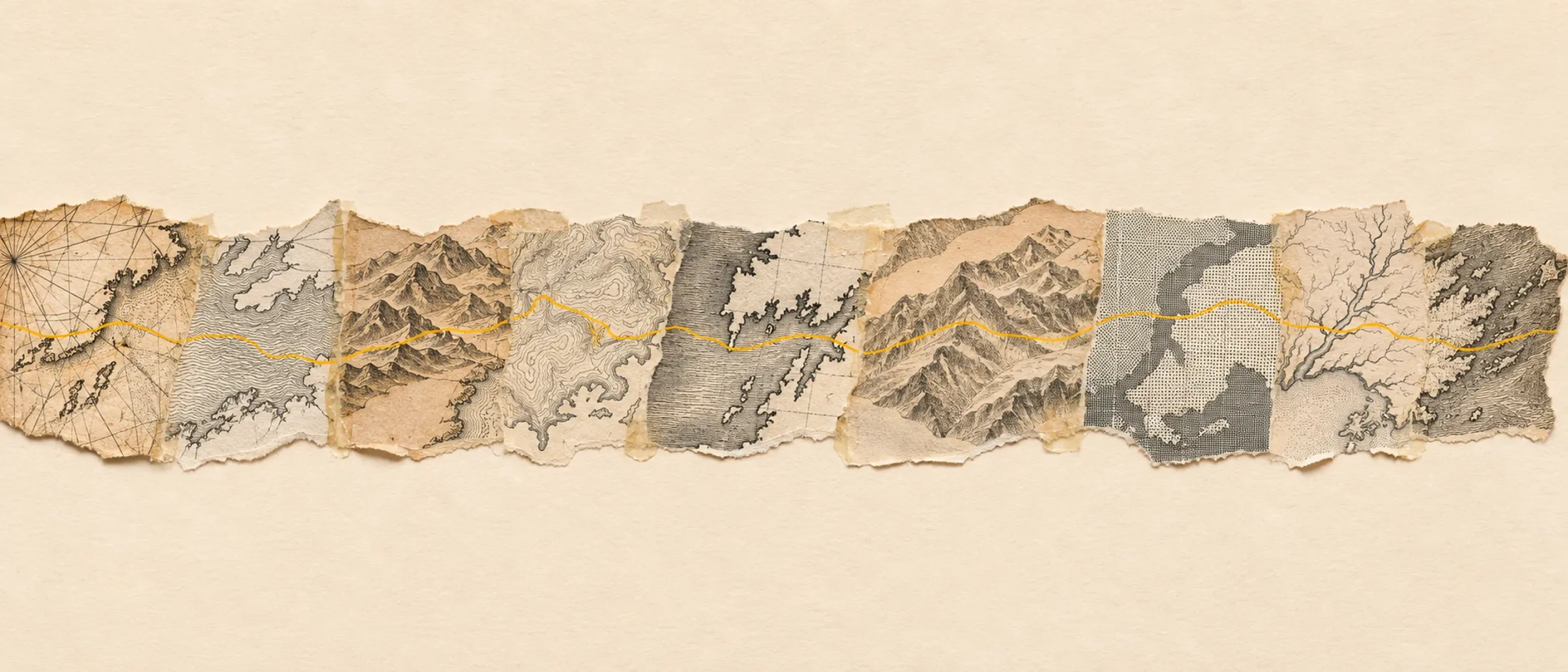
There are journeys from which a person comes back different. And there are journeys whose most important function is no longer having to be where a difficult question is waiting for an answer.
The difference is not in the miles. You can stay sitting in the same room and throw a fundamental belief overboard, and you can cross an entire continent and rebuild the same relationship to your own conflicts at every stop.
Expansion can make life bigger. But it can also prevent you from looking at an experience long enough for its meaning to change.
So the shadow of Sagittarius is not simply a taste for adventure. It shows up rather as a confusion of novelty with development, because every new possibility creates the feeling that something is moving again. As soon as a decision then brings commitments, repetition or consequences, it may lose exactly the appeal that made it so attractive before.
That is something other than the conscious decision against an unsuitable job or a relationship. People may change their minds and try things out, and an unfinished journey is far from a failure.
It only gets interesting when the function of the movement repeats itself, when the new thing isn’t chosen because it truly fits, but because the old thing has started asking questions that another horizon can silence for a while.
The reclamation is therefore not that Sagittarius finally has to stay at home. It lies in the decision to move no longer depending on whether standing still feels like a threat.
VII The shadow of truth The preacher and the escape route
Sagittarius can move away from the truth in at least two ways while being firmly convinced it is defending it with particular determination.
The first is dogmatism. A belief grows so tightly into your identity that correcting it no longer feels like a gain in insight, but like a loss. The former critic of religious, political or family dogmas then begins to measure others against a new binding worldview.
The second is an honesty that serves as an escape route. Someone says something true, perhaps even something necessary, and uses the sentence at the same time to exit the conversation. It then sounds like “I’m just being honest”, “that’s my truth” or “whoever can’t handle it can leave”.
A sentence gets said and the door slammed in the same moment, and afterwards it’s called authenticity.
You can make an entirely accurate observation and still dodge the responsibility for how you treat the person in front of you. You can draw a boundary without humiliating anyone unnecessarily, and you can name a conflict openly and still be willing to have your own view examined.
Truth and consideration are not opposites. What matters is whether honesty opens a space in which more reality becomes visible, or whether it closes the space as soon as your own statement is inside.
Not every unpleasant truth has to be packaged pleasantly. People whose voices were suppressed for a long time in particular owe nobody a soothing presentation of their experiences. Only the discomfort of a statement is no proof that it is true either.
Sagittarius needs the freedom to ask uncomfortable questions, and the freedom of others to hand uncomfortable questions back.
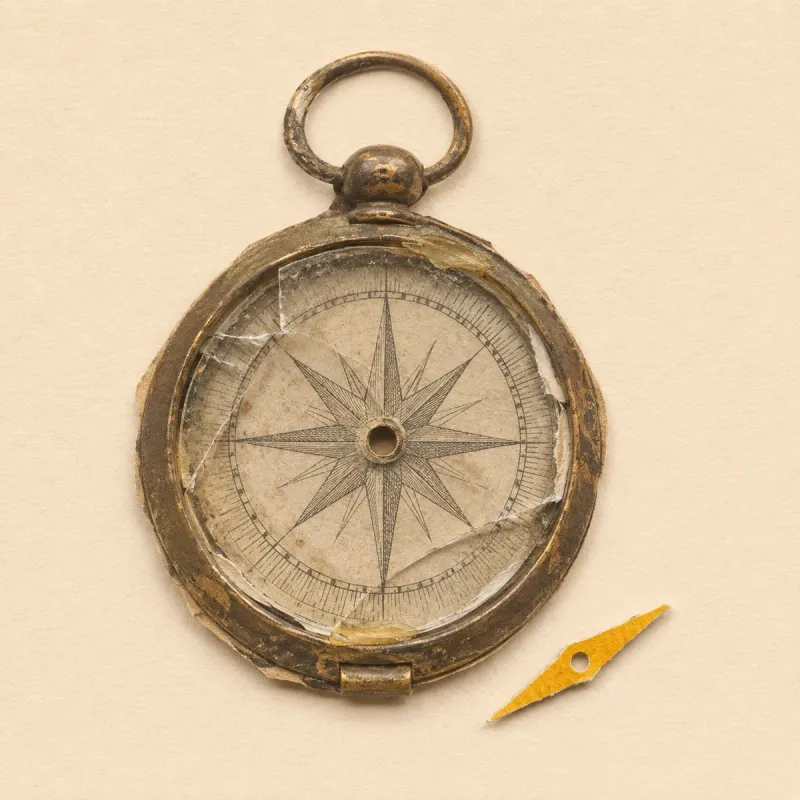
VIII The shadow of hope What remains when faith breaks?
Hope can be a form of resistance, because it prevents the present order from counting as final. But it can also ally itself with the refusal to look at the conditions of the present.
The decisive question for me is: does believing in a better future widen what I can do today, or does it release me from having to examine or change anything today?
And that brings us to disillusionment. A person finds that a relationship, a religious community, a political conviction or a career path does not deliver what they saw in it. They may then lose more than one particular hope, they lose a system that gave many other experiences their meaning.
That is why disillusionment is more than disappointment over a single event. It can tear open the question of what you still want to build on when you believe in possibilities.
One obvious answer is cynicism: if the old belief didn’t hold, then every further one is just a deception as well. The other is the immediate search for a new system that promises the same security.
But there is a third thing in between. An open question doesn’t have to be closed at once. A person can lose a belief without losing every possibility of meaning, and they can acknowledge that something wasn’t true without giving up the ability to look for truth.
This is not a request to kindly regard every disappointment as a gift right away. It is the possibility of telling, at some point, the loss of an answer from the loss of the question.
Maybe the most demanding form of Jupiterian hope is the one that no longer claims to already know what the future has to look like.
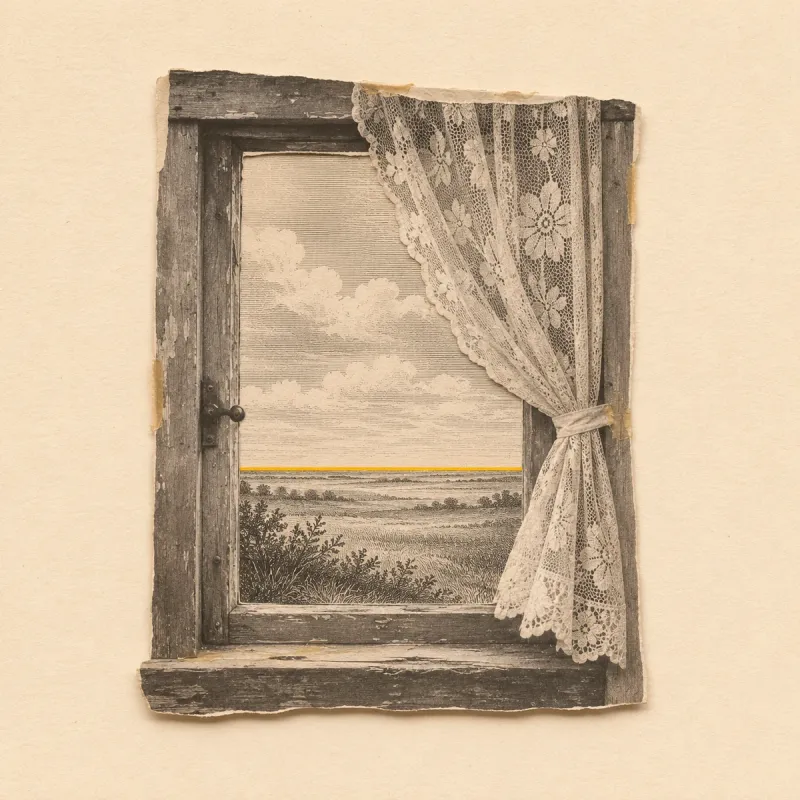
IX Who gets to have a horizon as a woman?
We love celebrating women’s freedom on posters. It gets harder as soon as a woman uses her freedom in a way that changes existing expectations.
If she wants to earn more money, she is greedy, and if she takes more time for herself, she is selfish. If she no longer shares a belief of her family’s, she is treated as ungrateful. And if she leaves an unbearable relationship, she is held responsible for the consequences of the change, while the conditions of the relationship before it receive noticeably less attention.
These labels don’t hit all women equally. Money, background, disability, racist attributions and family obligations all shape how much room there is and what it costs to use it.
So the feminist side of Sagittarius is not merely about encouraging women to dream bigger. It is about asking why their wishes so often need a special justification in the first place.
And we should take another look at the romantic tale of the boundlessly free woman as well. Not everyone can simply quit, buy a plane ticket or leave a family, and a freedom measured only by the visibility of such decisions overlooks what they require materially.
The horizon is not open equally wide for everyone.
“Just go for it” is therefore a sentence that works best for people who have a safety net. For everyone else it is a dare without a mat.
So a society that wants to grant women self-determination has to do more than tell them to be braver. It has to deal with which real limits can be changed, who has access to resources and which costs a woman is supposed to bear when her decisions don’t please others.
Freedom is not a reward for the most successful rebellion.
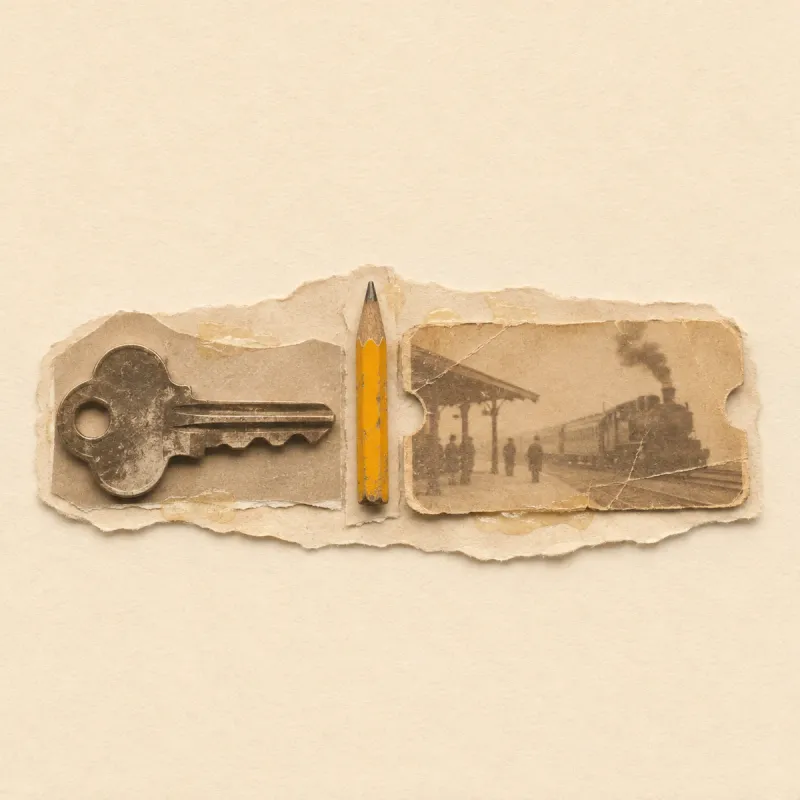
X The integrated expression Leaving, staying, changing
Integration doesn’t mean that Sagittarius finally becomes sensible, signs a five-year plan and promises society to stop asking unpleasant questions. But it doesn’t mean waving every bond through as a sign of special maturity either.
A person can choose a commitment because it matches a value of their own. They can accept limits because these make freedom possible for others too, they can notice that an agreement no longer holds and try to change its terms, and they can leave when the conditions for a self-determined life are not given there.
What matters is getting better and better at telling these possibilities apart. Am I staying because I choose to, or because I lack the means to go? Am I leaving because the relationship no longer fits, or because I read every uncertainty a real bond brings as a loss of my freedom? And can I change something without having to reinvent my entire existence?
There is no answer to these questions that holds for everyone. And they must never be used to persuade someone to stay in a violent or dangerous situation.
The integration of Sagittarius lies in freedom no longer being thought of only as the absence of a limit. It can also lie in helping to shape a limit yourself, in examining a belief and in taking responsibility without submitting.
A voluntary bond can be part of a free existence, and a free existence doesn’t have to prove in every moment that it is free.
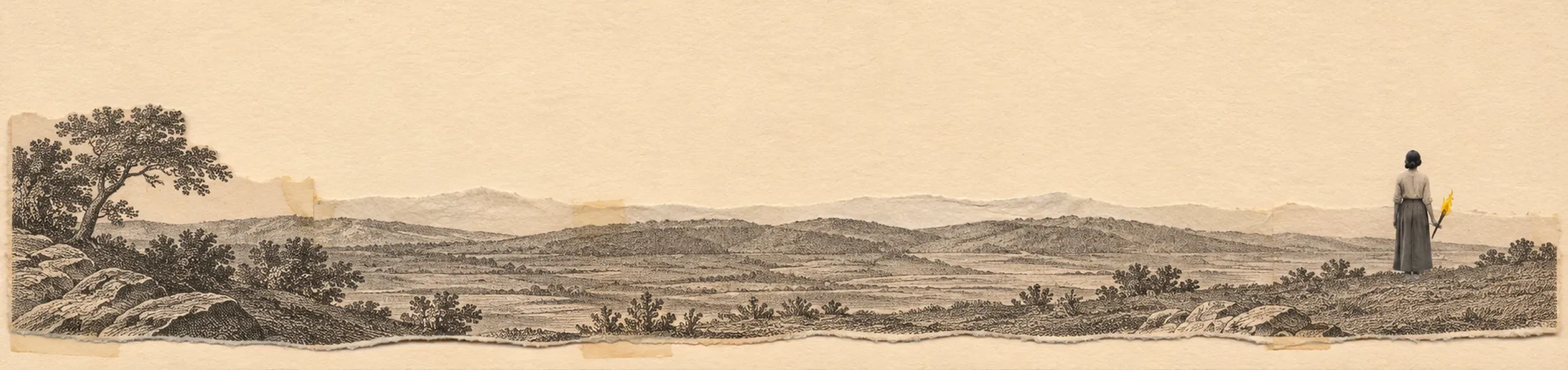
XI The Torchbreaker of the Old World
Maybe the old world isn’t entirely wrong. Maybe it contains knowledge, relationships and structures we want to keep, and maybe there are people living in it who learned to see questions as a threat and are still willing, one day, to reconsider an answer.
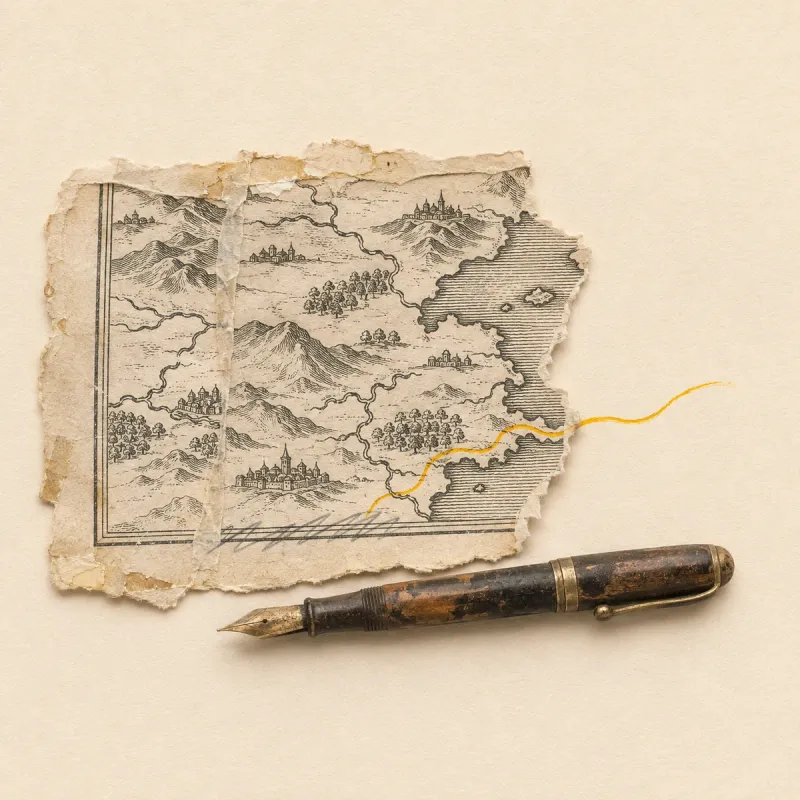
The Torchbreaker doesn’t tear up the map out of a hatred of maps. It only refuses to mistake it for the whole landscape.
It can honour a tradition without granting it an unlimited claim on the future. It can defend a belief without deriving from it a verdict on everyone else, and it can believe in possibilities without denying the present.
And it can discover that the new horizon it searched for so long sometimes lies in the way it engages with the life that is already there.
Because you can also correct a map instead of emigrating. You take a pen, cross out a border nobody can justify any more, and draw in a path that supposedly nobody had walked before.
The world as we know it is not necessarily the world as it has to be. Only a different one doesn’t come into being merely by our imagining it. It also comes from decisions, relationships, resources and the willingness to answer for the consequences of a belief.
So Sagittarius season invites us not only to ask what lies beyond the borders drawn in. It invites us to check which of these borders still have any justification at all, and which horizons we want to stop forbidding each other.
I do not need to run from life in order to remain free within it.
Natascha